
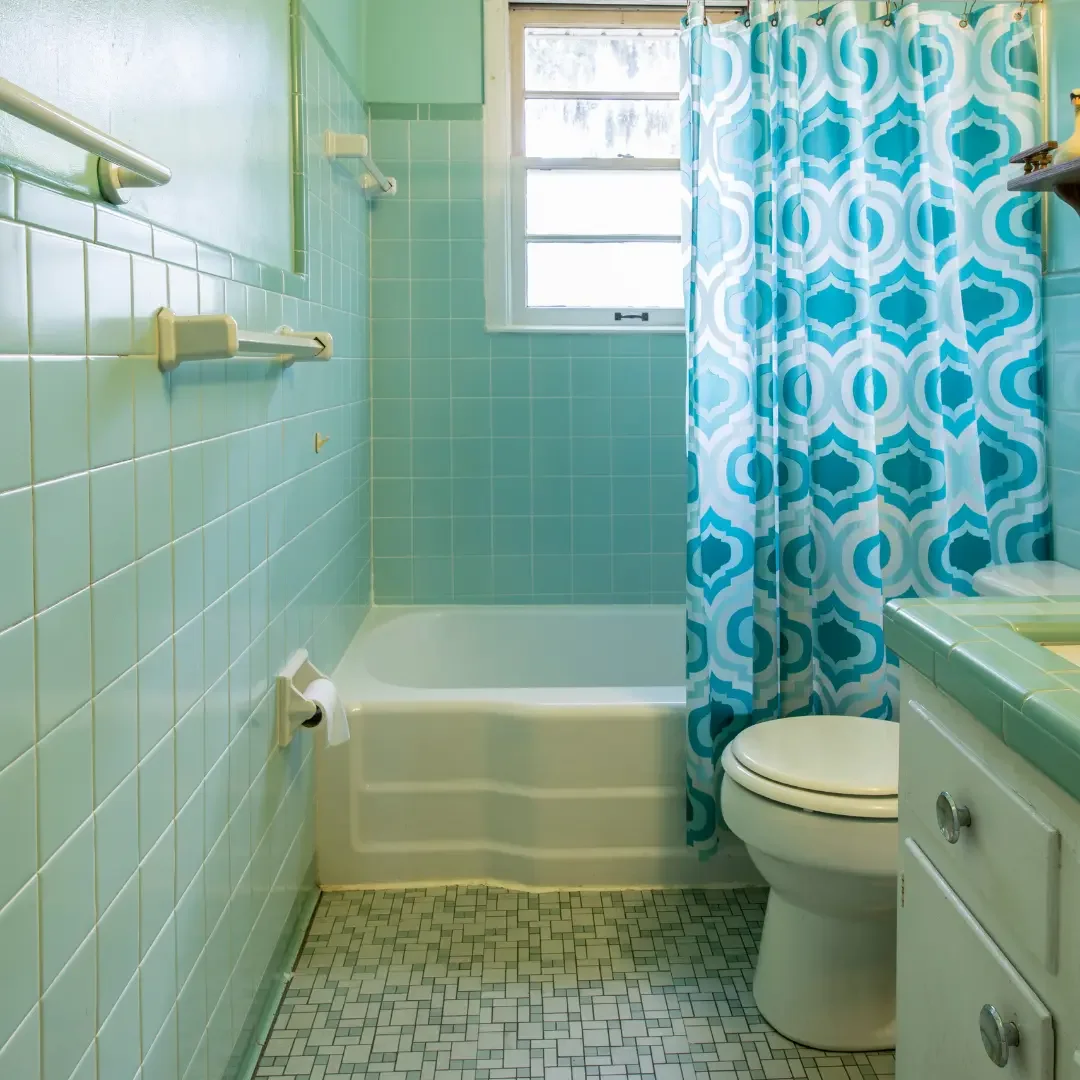
Dated mint green tile bathroom with original fixtures and mosaic tile floor, representing the bathroom revival candidate that Mr. Handyman of Dallas addresses through targeted improvements
Why Dallas Bathrooms Age the Way They Do
Bathrooms in Dallas homes age differently than bathrooms in most other markets, and understanding why helps homeowners make smart decisions about what targeted improvements will actually move the needle. The combination of hard water, intense UV exposure on south and west-facing windows, the clay soil foundation movement that gradually shifts frame and tile alignment over the years, and the long warm season that keeps bathrooms in heavy daily use for more than half the year creates a specific deterioration pattern that accumulates visibly and quickly in homes throughout Garland, Richardson, Mesquite, Carrollton, Rowlett, Sachse, and across Dallas proper.
Hard water is the condition that shapes bathroom maintenance in Dallas more than any other single factor. The dissolved calcium and magnesium minerals that the DFW water supply carries precipitate onto every surface where water contacts and then evaporates. Showerheads develop the spray-blocking mineral deposits that reduce coverage and flow. Tile grout in shower enclosures and at tub surrounds absorbs mineral staining that no cleaning product fully reverses once the buildup has worked into the grout's porous surface over years of exposure. Glass shower enclosures develop the permanent etching that hard water mineral deposits create at the microscopic level when they are allowed to dry repeatedly on the glass surface without adequate removal. Fixture finishes tarnish and develop the mineral-coated appearance that communicates age regardless of how recently the fixture was installed, if the hard water condition is not actively managed.
UV exposure is the second Dallas-specific aging mechanism that affects bathrooms, particularly in homes where a south or west-facing bathroom window receives significant direct sun through part of the day. UV degradation affects vinyl and composite surfaces at the molecular level, creating the yellowing and brittleness that older caulking, vinyl flooring, and some fixture components develop. Shower curtains, bath mats, and fabric accessories fade noticeably. And the heated air that UV-exposed walls and windows create in an enclosed bathroom space can accelerate the drying of soap residue and mineral deposits in ways that increase their adhesion to surfaces.
The clay soil foundation movement that is ongoing in Dallas geology creates the bathroom conditions that homeowners in Addison, Las Colinas, University Park, and Highland Park discover when they look carefully at grout joints near the floor-to-wall transition and at the caulking at tub or shower surrounds. Hairline cracks in grout at floor level, caulking at the tub surround that has opened slightly along the bottom joint, and tile that sounds hollow when tapped in specific areas all reflect the movement that the building above the clay soil experiences through seasonal moisture cycles year after year. These conditions require targeted correction before cosmetic improvements are layered over them.
A bathroom in a Dallas home that was last fully renovated in the mid-2000s or earlier has experienced a decade or more of these compounding conditions and likely shows the accumulated results in ways that are familiar to anyone who has lived with the space. The goal of a bathroom revival without full remodel is to address the visible aging at the targeted level where intervention is practical and affordable, replace the components whose condition communicates the most deterioration, and update the design details that date the space in ways that current owners and potential buyers respond to most directly.
Caulking: The First and Most Impactful Step in Any Dallas Bathroom Revival
Recaulking the bathroom is the single most cost-effective improvement available in a Dallas bathroom revival, and it is the one that most directly addresses the conditions that Dallas's climate creates in these spaces. Fresh caulking at the tub and shower surround, at the floor-to-wall transition, around the toilet base, and at any other joint where silicone or latex caulk has aged, cracked, stained, or separated transforms the bathroom's condition impression from neglected to maintained in a way that no surface cleaning replicates.
The specific reason caulking matters so much in Dallas bathrooms is that the clay soil movement that is ongoing beneath the home creates a continuous low-level stress on these joints that no installation permanently resolves. A bathroom that was caulked perfectly at the time of its last renovation has been subject to the building's seasonal movement since that day, and the joints that were sealed then have accumulated the micro-separations that this movement creates. Recaulking is therefore not simply a cosmetic refresh in a Dallas home. It is the practical maintenance activity that keeps moisture from entering behind tile and subfloor materials through joints that the home's own movement has compromised.
Before any new caulking is applied, complete removal of all existing caulking in the affected areas is the non-negotiable preparation step that professional application requires. Applying new caulking over old is among the most common shortcuts that produce bathroom revival results that fail within a season. Old caulking that has separated from the substrate, developed mold colonies beneath its surface, or become brittle through UV and age provides no adhesion base for new material. The new caulking applied over it inherits the underlying failures and begins to separate following the same failure pattern within weeks.
Silicone caulking in the colors matching the tile and fixture in the specific bathroom delivers the best long-term performance in Dallas's hard water and humidity environment. Silicone is non-porous, resists the mineral deposit adhesion that latex caulking's slightly more porous surface allows, and maintains its flexibility through the thermal and movement cycling that Dallas homes experience through the seasons. The difference in cost between quality silicone caulking and budget-grade products is negligible relative to the difference in how long the results hold in a DFW bathroom.
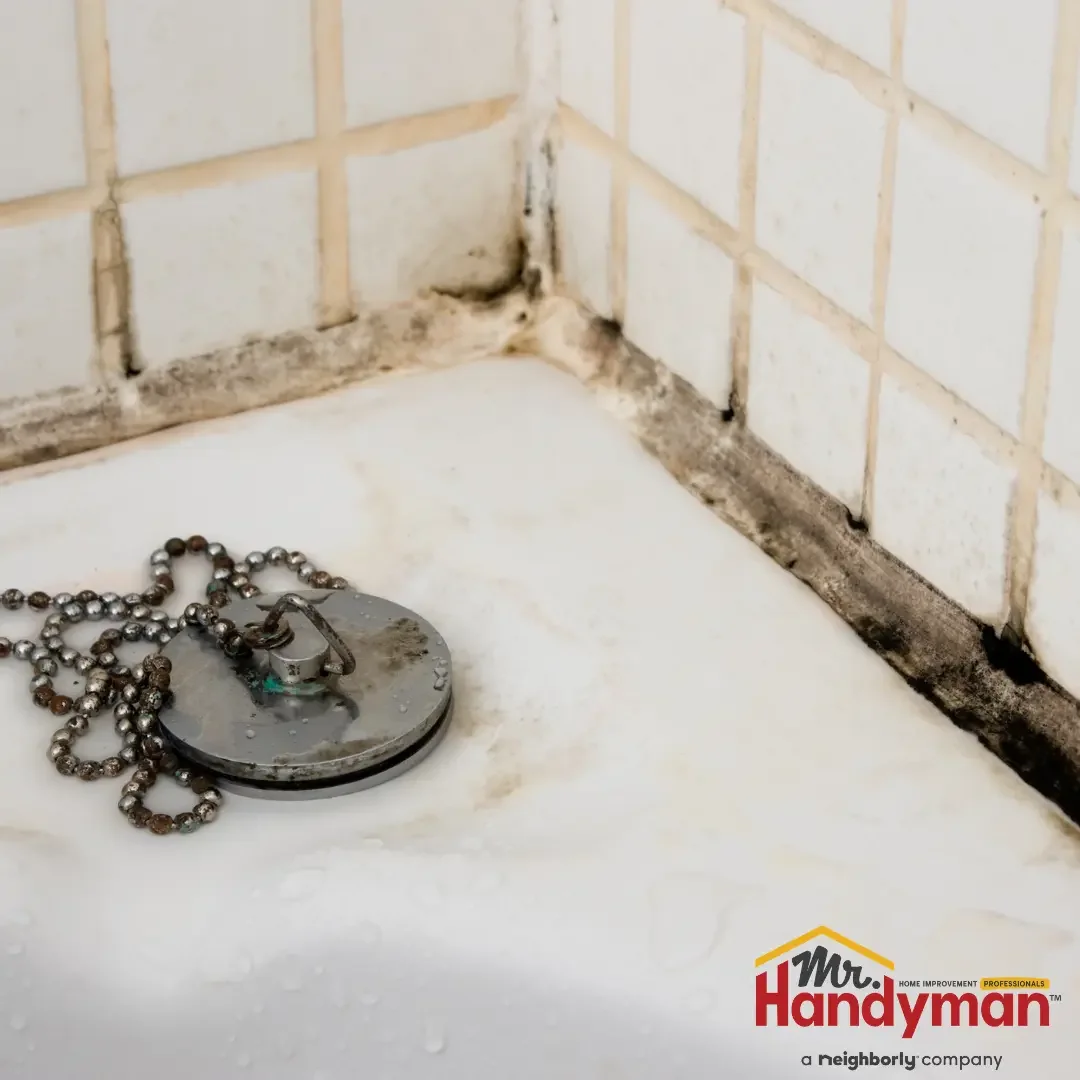
Close-up of stained grout and failed caulking at a tub surround corner with a corroded drain stopper, representing the hard water and clay soil conditions that Mr. Handyman of Dallas addresses in bathroom revival projects
Grout Refresh: Addressing What Hard Water Does to Dallas Tile
Grout in Dallas bathrooms tells the story of the home's water supply more directly than any other surface in the space. The mineral staining that accumulates in grout's porous matrix over years of hard water exposure creates the gray-brown discoloration that homeowners in older homes throughout Garland, Mesquite, Richardson, and Carrollton recognize immediately. Cleaning products address this temporarily at the surface level, but the staining that has worked into the grout's depth returns within days of cleaning.
Grout recoloring using a penetrating grout colorant applied to clean, sound grout is the targeted improvement that provides the most dramatic transformation in a bathroom where the tile itself is in good condition but the grout has been discolored by hard water and age. This product penetrates the grout's surface to a consistent depth and seals as it colors, creating a fresh, even appearance that also provides the barrier that prevents immediate recontamination by the same hard water minerals that caused the original discoloration. In Dallas bathrooms where the tile is sound and the original grout installation is intact, grout recoloring delivers the visual transformation of a full tile replacement at a fraction of the cost.
For grout that has developed hairline cracking at floor-level joints due to clay soil foundation movement, or that has separated from tile edges in the lower courses of a shower enclosure where movement stress concentrates, regrout of the affected sections before colorant application is the complete approach. Applying colorant over cracked or separated grout produces an appearance result that fades quickly as the underlying cracking continues. Regrout of the specifically affected joints, followed by thorough cleaning and colorant application throughout, produces a result that holds through subsequent movement cycles rather than highlighting existing damage.
Grout sealing after any regrout or recolor application is a step that Dallas bathrooms specifically require and that homeowners sometimes skip with consequences they feel within months. Sealed grout resists the mineral deposit penetration that Dallas's hard water accelerates dramatically, and it resists the mold growth that the warm humidity of a frequently used Dallas bathroom promotes. The sealer application takes under an hour in a standard bathroom and provides protection that makes the recolor or regrout investment worth maintaining.
Fixture Updates: The Detail Changes That Date a Bathroom Most
Bathroom fixtures are the detail elements that visitors and potential buyers assess immediately when they enter a space, and they are the elements most likely to communicate a specific renovation era that no longer aligns with current design directions. In the bathrooms of Dallas homes renovated in the brass-dominant era of the late 1980s and 1990s, or in the brushed nickel era that followed, the fixture finishes alone communicate the decade of the renovation as clearly as a date stamp. Updating these details while retaining sound tile and vanity infrastructure is among the most efficient design modernizations available in a Dallas bathroom revival.
Faucet and hardware replacement targeting the finish and profile as the primary design update delivers immediate and visible transformation at accessible cost. In Dallas's current residential design direction, the bathroom finishes that read as current and intentional rather than dated are matte black (the dominant choice across contemporary and transitional directions), brushed gold and unlacquered brass (resonant in the warmer, more traditional directions common in established Highland Park and University Park homes), and brushed nickel where the balance of the bathroom's materials calls for a cooler tone. The key is finish consistency across all visible metal elements: faucets, towel bars, robe hooks, toilet paper holders, and any lighting fixtures with exposed metal components. A bathroom where these elements are coordinated in the same current finish reads as designed regardless of the age of the underlying materials.
Towel bar and accessory replacement is the lowest-cost single improvement in a Dallas bathroom revival that produces the most consistent visible improvement per dollar spent. A bathroom where every accessory, including the towel bar, hand towel ring, robe hook, toilet paper holder, and any additional accessories specific to the space, has been replaced with coordinated hardware in a current finish reads as refreshed throughout its daily use and in any photographic representation. In Dallas's active real estate market, where listing photography shapes buyer interest before in-person visits happen, this coordinated hardware impression is a genuine competitive advantage.
Showerhead replacement addresses both the hard water performance issue and the design currency issue simultaneously in a Dallas bathroom revival. A showerhead that has accumulated years of Dallas hard water mineral deposits in its spray nozzles delivers reduced flow and uneven spray pattern that every shower makes apparent. Replacing it with a current WaterSense-certified model in the appropriate finish resolves the performance degradation and updates the most prominent fixture in the shower in a single installation. In Dallas bathrooms where the shower experience is the primary functional priority, a rainfall or multi-function showerhead upgrade elevates daily use in ways that the existing fixture simply cannot deliver at any level of maintenance.
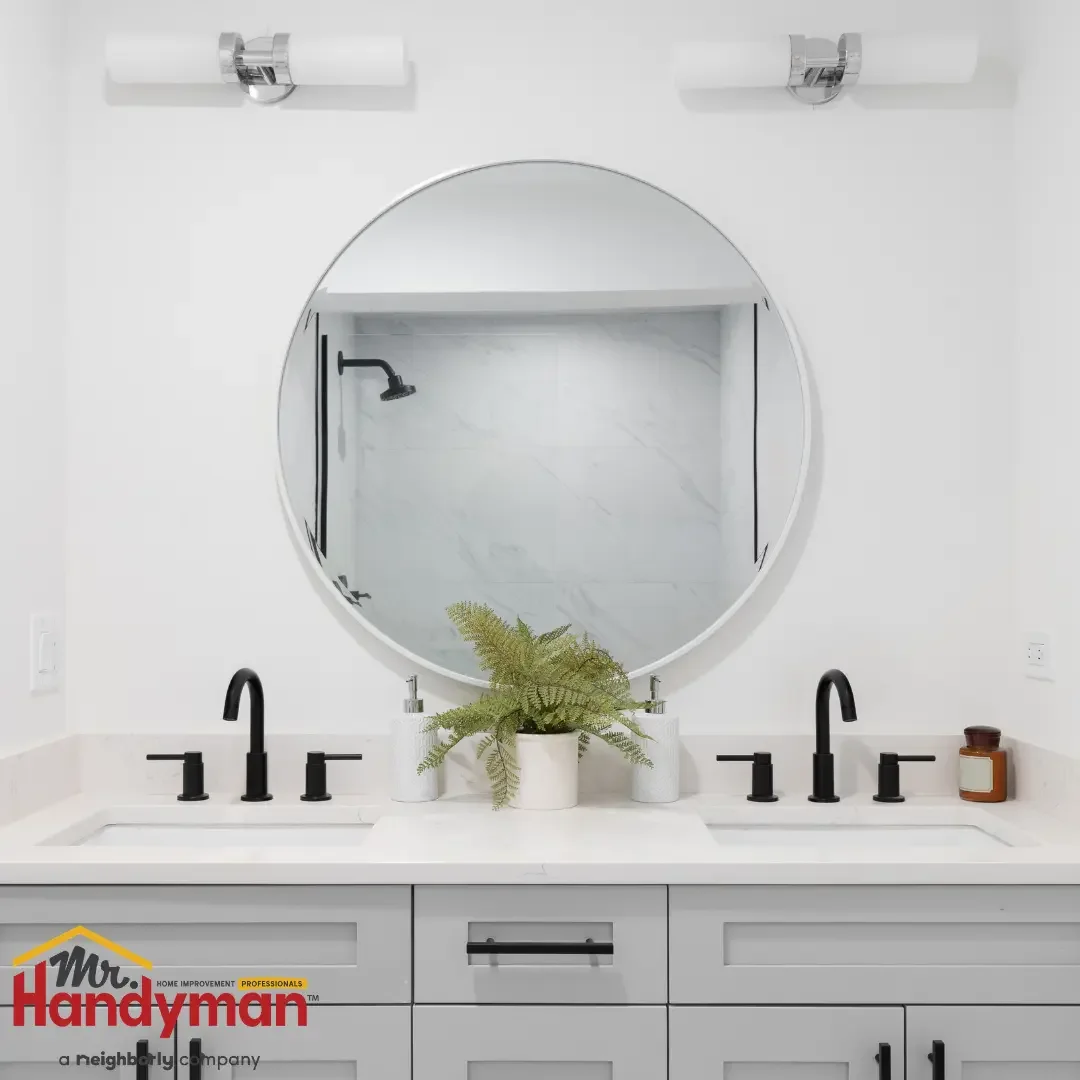
Updated double vanity with a large round framed mirror, matte black faucets and hardware, white quartz countertop, and flanking chrome sconces, representing the mirror and lighting transformation Mr. Handyman of Dallas installs in bathroom revival projects
Vanity Mirror and Lighting: The Visual Transformation That Changes the Room's Character
The mirror and lighting combination above the vanity is the single most impactful element in how a Dallas bathroom reads in daily use and in photography. The standard bathroom mirror that was installed during original construction or a previous renovation, surrounded by the strip of globe-bulb lighting that builder-grade bathrooms have used for decades, creates the functional and visual baseline that most Dallas homeowners are familiar with from homes throughout Garland, Rowlett, Richardson, and Carrollton. Replacing this combination with a framed or frameless mirror of appropriate scale and a horizontal vanity bar or flanking sconces at face height transforms both the quality of light for daily use and the visual character of the space.
The lighting quality improvement is the functional benefit that makes this change immediately and permanently felt in daily use. Globe-bulb strips above a mirror create a downward shadow on the face that is unflattering and that makes detail tasks like applying makeup or shaving unnecessarily difficult. A horizontal vanity bar at the appropriate height, or flanking sconces positioned at face level rather than overhead, creates the even, shadow-free illumination that bathrooms designed for actual daily use require. In Dallas bathrooms where morning routines are rushed and lighting quality affects the start of every day, this is not a luxury upgrade. It is a fundamental functional improvement.
The visual transformation is the design benefit that makes the change significant in how the bathroom reads to anyone who enters the space. A framed mirror with appropriate weight and scale for the wall it occupies, paired with fixtures in a finish that coordinates with the updated hardware throughout the bathroom, creates the resolved appearance that distinguishes a thoughtfully updated space from one where individual elements are acceptable but the overall impression is generic. In Dallas's design-conscious residential market, this distinction is visible and valued.
Flooring Updates That Dallas Bathrooms Specifically Benefit From
Bathroom flooring in Dallas homes reflects the clay soil foundation movement and the hard water conditions that accumulate over years of ownership in visible and tactile ways. Grout joints in floor tile that have cracked, filled with mineral staining, or developed the raised or sunken conditions that foundation movement creates make the floor feel and look worn in ways that no cleaning resolves. And in older Dallas bathrooms where the original flooring reflects the design directions of previous decades, peel-and-stick vinyl or the small-mosaic tile that was standard in certain eras, the flooring communicates the renovation's age as clearly as any other element.
Floor tile replacement is a realistic scope for a Dallas bathroom revival that stops short of full remodel because the bathroom floor is a contained area where quality tile installation can be completed in a single professional visit without disturbing the walls, vanity, or fixture connections. In the bathrooms of homes throughout Sachse, Sunnyvale, Balch Springs, and the established neighborhoods of Dallas proper where floor tile has accumulated years of Dallas hard water and clay soil movement, replacement with large-format porcelain tile in a current format and color creates a floor that looks fresh, manages Dallas's hard water through appropriate sealing, and holds up through the movement cycles that this geology creates better than the smaller-format tile it replaces.
Luxury vinyl plank or tile is the appropriate flooring choice in Dallas bathrooms where the budget for full tile replacement is not available but where the existing flooring is genuinely beyond its useful condition. Current luxury vinyl products handle moisture completely, install over existing subfloor without requiring the demolition that tile installation needs, and create the visual impression of natural stone or hardwood without the susceptibility to Dallas's hard water that real stone requires or the moisture sensitivity that wood carries in bathroom environments. For Dallas homeowners in Hutchins, Wilmer, Seagoville, and other communities where practical value per dollar drives improvement decisions, this approach delivers a complete visual transformation of the bathroom floor at a fraction of the tile replacement cost.
Ventilation: The Dallas Bathroom Need That Drives Every Surface Condition
Exhaust fan performance is the bathroom improvement that most directly affects how long every other improvement in the space lasts, and it is consistently overlooked in bathroom revival planning. Dallas's warm season creates a bathroom environment where showering generates humidity that, without adequate ventilation, remains in the air of the enclosed space for extended periods. This residual humidity promotes the mold growth at grout joints and caulking that makes fresh installations look aged within months. It creates the ongoing moisture cycling that accelerates mineral deposit formation from Dallas's hard water. And it creates the warm, humid background conditions that make every surface in the bathroom more vulnerable to the biological and mineral accumulation that characterizes older bathrooms in this market.
An exhaust fan that is technically functioning but moving inadequate air volume due to accumulated dust on the fan blades, worn motor bearings that have reduced impeller speed, or ductwork that is too long or poorly routed to allow effective air movement is providing the sound of ventilation without its substance. Testing actual fan performance by holding a sheet of paper near the grille while the fan runs confirms whether the fan is moving air with meaningful velocity or simply running without effect.
Exhaust fan replacement with a correctly sized unit for the bathroom's square footage, vented through a properly routed duct run to the exterior of the home, is the foundational improvement that makes every other bathroom revival investment in a Dallas home last as long as it should rather than deteriorating back toward the conditions that prompted the revival within a year or two.
Frequently Asked Questions
What is the first improvement to make in a Dallas bathroom revival?
Recaulking all joints throughout the bathroom should come first, for two reasons. It addresses the moisture infiltration pathways that clay soil movement has opened in the joints at the tub surround, floor wall transitions, and fixture bases, and it establishes the clean, well-maintained baseline appearance that makes every subsequent improvement read at its best. A fresh-caulked bathroom looks maintained even before any other changes. A bathroom with deteriorated caulking looks neglected even with updated fixtures.
How does Dallas hard water affect how long bathroom improvements last?
Hard water accelerates mineral deposit formation on every surface that water contacts, which means improvements that address grout condition, caulking, fixture finishes, and shower enclosures will face the same accumulation pressure that created the original condition. Sealing grout after recoloring, choosing non-porous caulking materials, selecting fixture finishes with hard water resistance in mind, and ensuring adequate exhaust ventilation to reduce the humidity that accelerates deposit formation are all practices that extend the life of bathroom revival improvements in the DFW hard water context.
Can a bathroom revival add value in Dallas's current real estate market?
Yes, consistently. Dallas's real estate market is visually sophisticated and active, and bathrooms that photograph well and feel fresh in person differentiate properties from comparable listings. The targeted improvements discussed here, particularly fixture updates, caulking and grout refresh, and mirror and lighting replacement, cost a fraction of what a full bathroom remodel requires and produce the clean, current impression that Dallas buyers respond to immediately.
Is grout recoloring a lasting solution in Dallas bathrooms?
Yes, when properly prepared and sealed. The failure mode of grout recoloring in Dallas bathrooms is almost always inadequate preparation, either old caulking not fully removed before the recolor is attempted, or the recolor applied without thorough sealing afterward. Properly executed grout recoloring with quality penetrating colorant and appropriate sealer holds through years of Dallas hard water exposure and heavy daily use.
Should bathroom flooring be addressed before or after fixture updates in a revival scope?
Floor tile replacement or luxury vinyl installation should come before fixture updates because floor work inevitably involves some risk of fixture contact or debris generation. Completing the floor first creates the clean, finished surface that all subsequent improvements build on, and it prevents the situation where freshly updated fixtures need protection during floor work that follows.
What exhaust fan size is appropriate for a standard Dallas bathroom?
Exhaust fan sizing is based on the bathroom's square footage, with a general guideline of one CFM of airflow per square foot of floor area. A standard Dallas bathroom of 50 to 60 square feet requires a fan rated at 50 to 60 CFM minimum, with a 70 or 80 CFM unit appropriate for bathrooms that experience heavy steam from long showers or that have accumulation conditions suggesting current ventilation is inadequate. Fan selection should also account for ductwork length, as longer duct runs reduce effective airflow below the fan's rated capacity.
Transform Your Dallas Bathroom Without the Scope of a Full Remodel
A Dallas bathroom that has aged under the specific conditions North Texas creates can be meaningfully revived through the targeted improvements described here, without the timeline, cost, or disruption of a complete gut renovation. The team at Mr. Handyman of Dallas brings the tile, caulking, carpentry, and fixture installation expertise to handle every aspect of a bathroom revival throughout Addison, Carrollton, Farmers Branch, Garland, Highland Park, Las Colinas, Mesquite, Richardson, Rowlett, Sachse, Sunnyvale, University Park, and Dallas proper.
Call us at (972) 627-4518 or visit www.mrhandyman.com/dallas to schedule your bathroom revival service. We show up on time, work cleanly, and back everything we do with the Neighborly Done Right Promise.
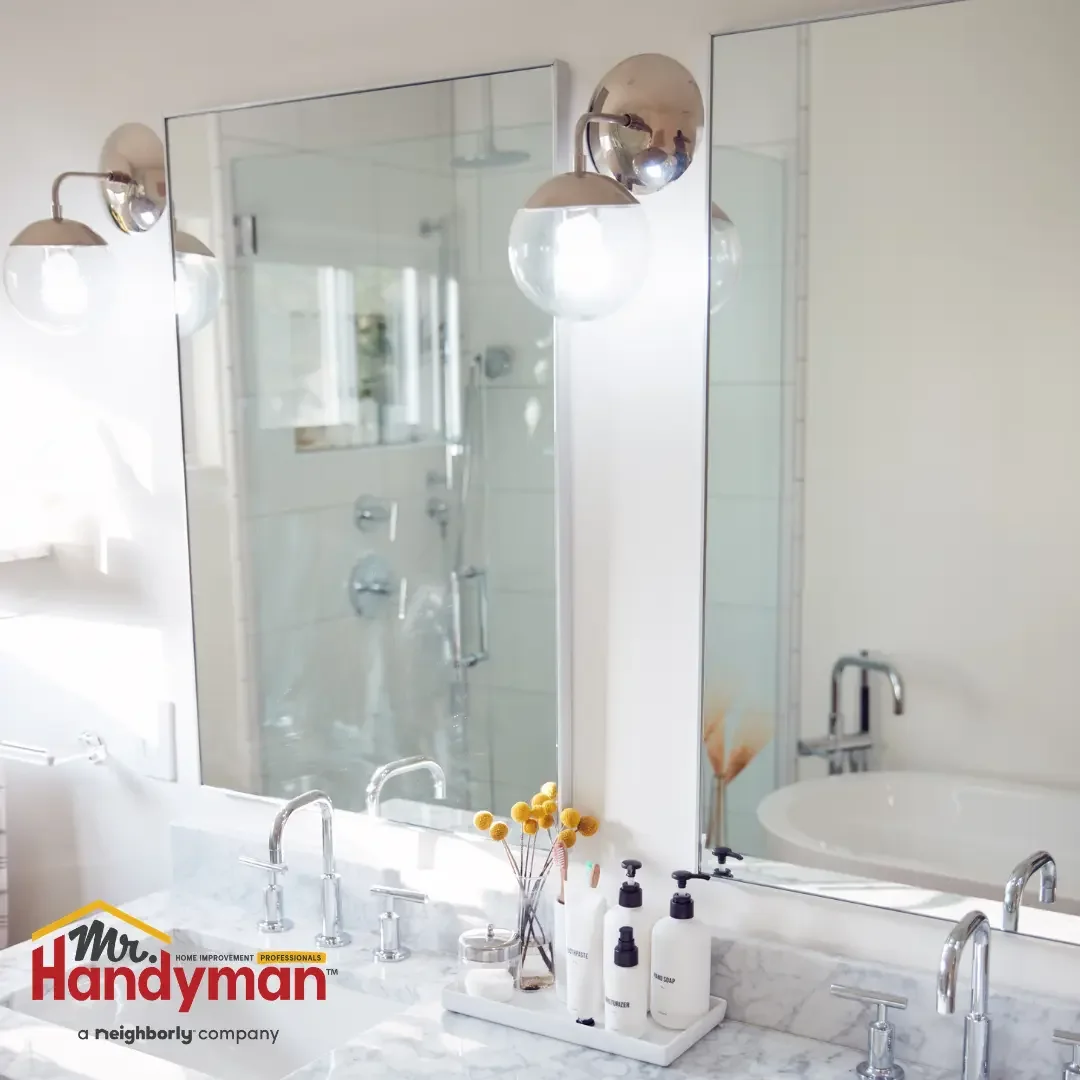
Bright bathroom with frameless mirrors, chrome globe sconces, marble countertop, chrome cross-handle faucets, and a glass shower enclosure visible in the mirror reflection, representing fixture and lighting updates
